
Mental Health & Meals: Combating Workplace Loneliness Through Shared Lunches
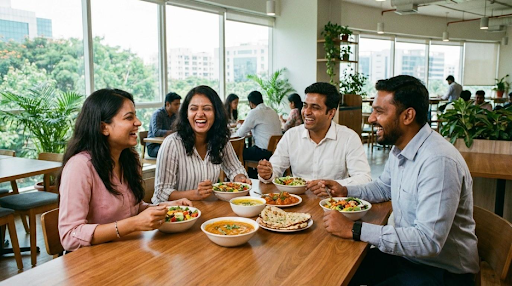
In the hyper-connected, fast-paced environment of Bangalore's bustling tech hubs, efficiency is often prioritised above all else. We have Slack for instant communication, Zoom for virtual meetings, and project management tools to track every minute of the day. Yet, paradoxically, as our digital connectivity reaches all-time highs, authentic human connection in the workplace is plummeting. A silent epidemic is sweeping through modern offices: workplace loneliness.
Employees are increasingly eating "al desko", consuming a quick, solitary meal in front of a glowing monitor, headphones firmly on, simultaneously scrolling through emails and chewing. While this might masquerade as ultimate productivity, it is profoundly damaging to both individual mental health and overall company culture. Loneliness at work is not just a personal grievance; it is a critical business challenge. Disconnected employees report lower job satisfaction, exhibit reduced engagement, contribute less to collaborative efforts, and represent a significantly higher flight risk.
The Psychological Impact Of Eating Alone
The human brain is inherently wired for social interaction. Throughout history, the act of eating has rarely been a solitary pursuit; it has been a communal ritual, a time for tribe and family to bond, share resources, and communicate. When we strip eating of its social context, we lose a vital opportunity for psychological decompression.
Eating alone at a desk blurs the crucial boundary between "work time" and "rest time." The brain does not receive the necessary signal to pause, reset, and recover from the cognitive load of the morning. This continuous, unbroken cycle of stress hormones inevitably leads to mid-afternoon burnout, heightened anxiety, and a pervasive sense of isolation. When employees feel isolated, their psychological safety drops. They become less likely to voice innovative ideas, less willing to ask for help, and more prone to feeling overwhelmed by their daily tasks.
The Science Of Commensality: Shared Dining
The antidote to this modern corporate isolation is surprisingly ancient: commensality, or the practice of eating together. The science supporting shared dining in the workplace is robust. When people sit down to share a meal, several transformative psychological processes occur.
First, shared meals act as powerful "silo-busters." In a typical tech park office, a developer might never interact with someone from the marketing team, or a junior analyst might never speak to a senior director. A communal cafeteria setting naturally breaks down these hierarchical and departmental barriers. It forces serendipitous interactions.
Second, eating together triggers the release of oxytocin, often dubbed the "bonding hormone." This biochemical reaction fosters trust, empathy, and cooperation among colleagues. Research has consistently shown that teams who eat together perform significantly better on collaborative tasks compared to teams who eat separately.
Strategies For Fostering A Shared Dining Culture
Recognising the value of shared lunches is the first step, but as a facility manager or human resource leader, how do you actively encourage it? Simply providing a room with tables is insufficient. The environment must be intentionally designed to invite connection.
- Implement Family-Style Serving: Instead of individual plated meals where everyone takes their tray to a separate corner, consider integrating family-style options for certain teams or days. Serving larger bowls of food in the centre of a table naturally necessitates interaction. The simple act of saying, "Could you pass the dal?" initiates a conversation and breaks the ice.
- Invest In Communal Seating: The physical layout of your cafeteria dictates social behaviour. Replace isolated two-person tables with longer, banquet-style seating. Long tables implicitly signal that anyone is welcome to pull up a chair and join the group.
- Create Tech-Free Zones: Encourage "screen-free" lunch hours. Designate specific areas of the cafeteria where laptops and smartphones are discouraged. When the digital crutch is removed, employees are far more likely to engage with the person sitting across from them.
- Leadership Must Lead By Example: If the C-suite and senior managers constantly eat lunch in their closed offices, the rest of the company will follow suit. Leaders must visibly participate in communal dining to signal that taking a real lunch break is not only acceptable but encouraged.
The Business ROI Of Connected Teams
Investing in a high-quality, communal corporate dining experience through a B2B food caterer like Nibble Foods is not merely an employee perk; it is a strategic investment in human capital. The return on investment (ROI) is measured in reduced employee turnover, lower absenteeism due to stress-related illnesses, and a marked increase in cross-departmental innovation.
When you transform your Bangalore office cafeteria from a mere fuelling station into a vibrant social hub, you do more than feed your employees. You nourish their mental health, combat the pervasive threat of loneliness, and build a resilient, deeply connected workforce equipped to handle the challenges of the modern business landscape.
Citations:
- Holt-Lunstad, J., Smith, T. B., & Layton, J. B. (2010). Social relationships and mortality risk: a meta-analytic review. PLoS Medicine.
- Kniffin, K. M., Wansink, B., Shimizu, M., & Peng, J. (2015). Eating together at the firehouse: How workplace commensality relates to the performance of firefighters. Human Performance.